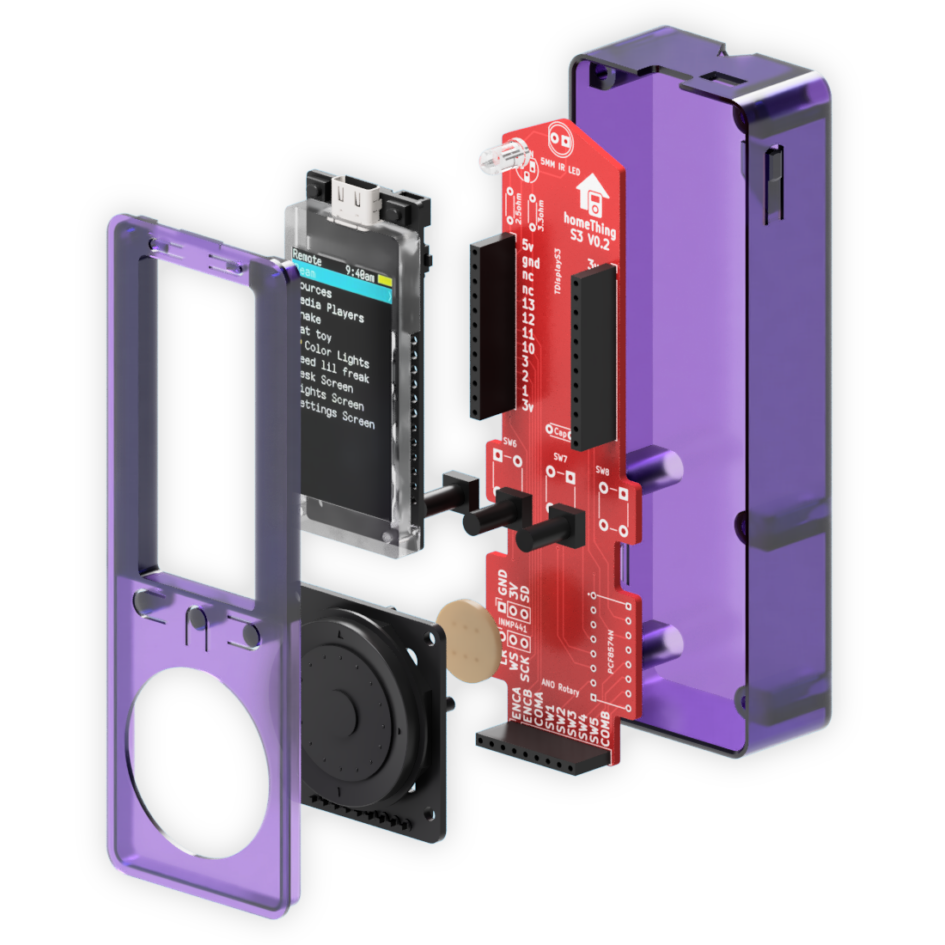
The original homeThing proved that an iPod-style interface works well for controlling a smart home. homeThing S3 is the hardware I designed around that idea, with a faster ESP32-S3, a larger display, more buttons, and a custom circuit board that makes the remote much easier to assemble.
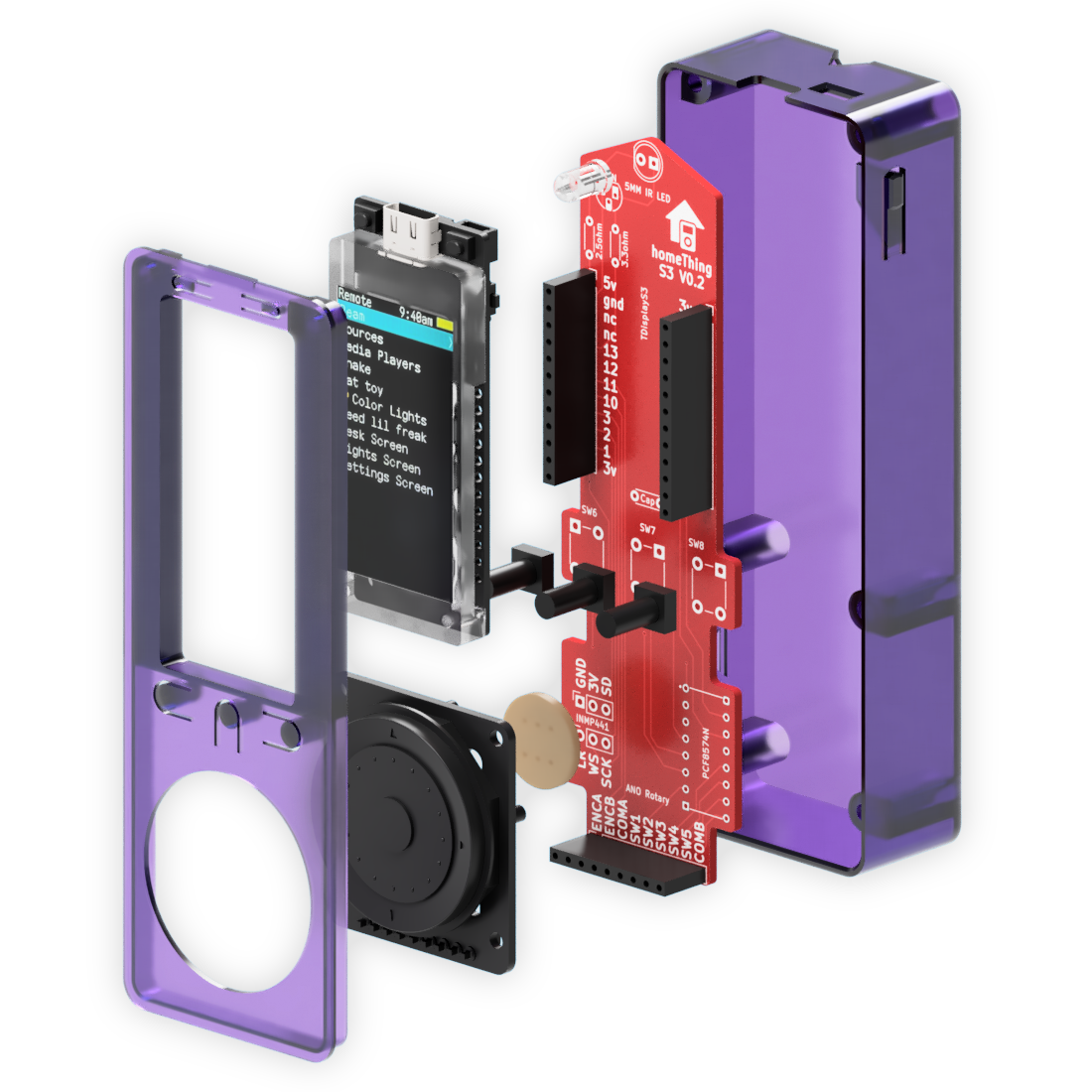
built around physical controls
The remote uses a LilyGo T-Display S3 and an Adafruit ANO directional navigation encoder. The wheel handles scrolling and volume, while the directional and configurable buttons give each screen useful controls without relying on touch.
- ESP32-S3 with integrated colour display
- scroll wheel and five configurable buttons
- custom PCB for simpler assembly
- IR blaster for infrared devices
- internal I2S microphone for voice assistant experiments
- rechargeable LiPo battery and USB-C
- two-part 3D-printable enclosure
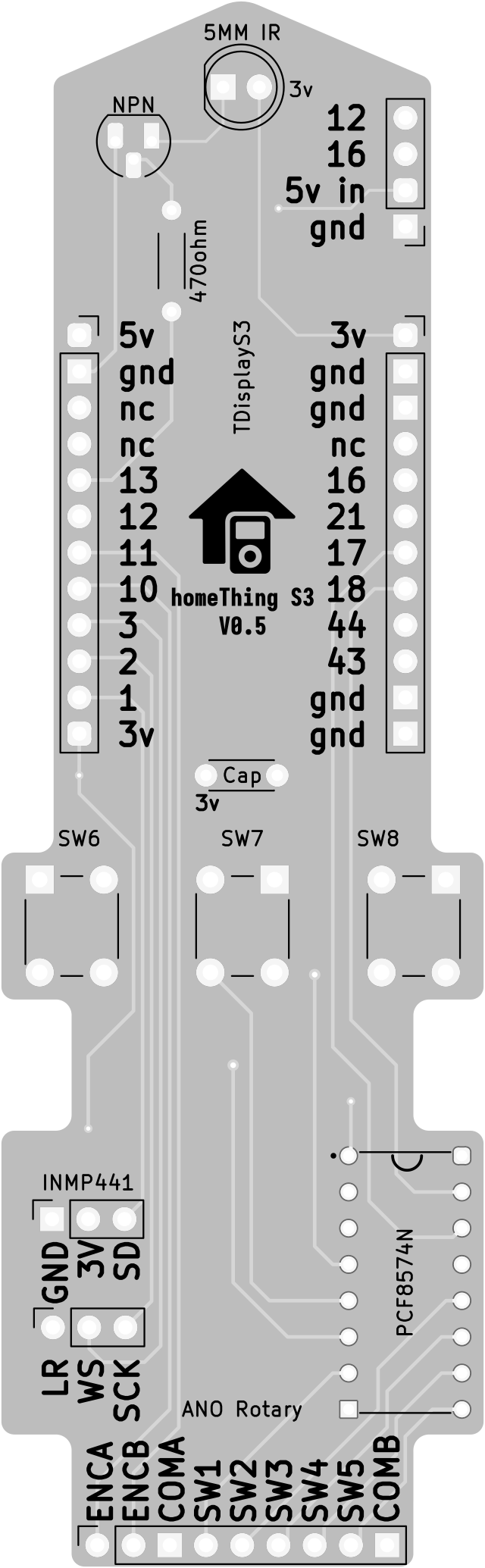
open hardware
The project includes the KiCad board design, Gerbers, DXF, Fusion 360 design, and STL files. There are separate front enclosure files for FDM and SLS printing. The FDM version removes the raised front buttons so it can print flat without supports.
You can source and build the parts yourself, or order the case and circuit board through the shared PCBWay project. The ESPHome configuration is in the same repository as the hardware files.